
Its amber colour, its bold flavour, that slight bitterness you grow to love over time. Black tea has something reassuring, almost familiar, even to those who don't know much about it. It has travelled across continents for centuries and lost none of its charm. Before your next cup, here's what you really need to know about black tea benefits, whether it's good for you, its caffeine content, and how to brew it — no exaggerated claims, just the facts.
What makes black tea different from other teas?
All tea leaves come from the same plant, Camellia sinensis. Surprising, isn't it? What changes everything is the processing the leaves go through afterwards. Black tea undergoes full oxidation, a bit like a cut apple browning in open air, except here it's deliberate and controlled. The result: a dark colour, a bolder flavour, sometimes woody, sometimes malty depending on origin. Green tea, on the other hand, keeps its barely oxidised leaves, which is what creates such a clear difference in character between the two.
And then there's origin, which really changes things on the palate. An Indian Assam hits hard, malty, almost rustic. A Chinese Keemun leans into a smoky note, more delicate and refined. Ceylon from Sri Lanka stays livelier, fresher. Three black teas, three completely different experiences.
Does black tea have caffeine?
Because of full oxidation, black tea contains more caffeine than green tea — typically between 20 and 45 mg per cup, depending on the variety and steeping time. That's why it's mostly enjoyed in the morning or early afternoon, for anyone wanting a gentle lift without reaching for coffee.
Caffeine in tea, sometimes called theine, actually works differently from the caffeine in coffee: it kicks in more slowly but lasts longer. That's why a morning cup of black tea often feels smoother and less jarring than a shot of espresso.
Is black tea good for you? The main benefits
Beyond the simple pleasure of a cup, black tea does come with a few well-documented benefits — as long as you don't expect miracles. Here's what it's generally credited with:
- A good dose of antioxidants, particularly theaflavins, which help protect cells
- A stimulating effect from caffeine, though gentler than coffee, almost gradual
- A possible boost for cardiovascular health, according to several studies
- A contribution to daily hydration, despite the caffeine it contains
Two to three cups a day are plenty to enjoy these benefits. Beyond that, it becomes more of a habit than an actual health boost.
How to brew black tea properly
This is where a lot of people go wrong without realising it. Water that's too hot, steeping that drags on too long, and bitterness takes over without adding anything to the benefits. Around 90 to 95°C, steeped for 3 to 5 minutes depending on the strength you want: that's roughly the rule that works best.
The good news is that black tea is more forgiving than green tea when it comes to brewing. It can handle almost-boiling water without turning aggressively bitter. That's probably why it's often recommended to beginners who haven't yet developed the habit of watching their thermometer.
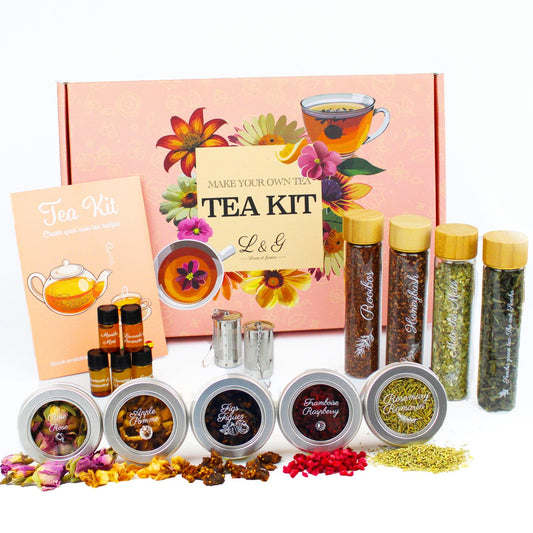
To try several origins without ending up with a drawer full of half-used packets, the Tea & Infusion Kit is a good option. It lets you compare smoky, fruity, or more classic notes to finally find the one that's really you.
Does black tea work as an iced tea too?
It's often associated with cool mornings, but black tea knows how to reinvent itself in summer too. Its bold flavour holds up well against ice, unlike more delicate teas that lose all their character once chilled.
For a simple, effective first version, this homemade iced tea recipe is a great base you can then make your own. And to go further, these five ultra-flavourful iced tea recipes offer more combinations with red berries, citrus, and fresh herbs.
Are there any precautions to take with black tea?
Nothing alarming, but a few points are worth noting. If you're sensitive to caffeine, it's best to avoid black tea late in the afternoon or evening, or you might find yourself staring at the ceiling at midnight.
The tannins in black tea can also slightly reduce iron absorption. That's not a concern for occasional drinking, but if you're watching your iron intake, avoid drinking it right with meals. Pregnant or breastfeeding women should also keep it moderate — one to two cups a day maximum.
For anyone who loves the ritual of brewing but wants to skip caffeine entirely, there are equally delicious alternatives. Learning to prepare a perfect honeybush infusion lets you keep that moment of calm even in the evening, with no worries about the sleep that follows.
A simple drink with real character
Black tea has never really left our cups, and it's easy to see why. Between its bold flavour and its genuine benefits, it keeps winning people over, generation after generation. Hot in the morning, iced in summer, it adapts without losing its soul.
There are still so many origins to try, so many ways to brew it. Those who take the time to really get to know it often find it's much more than just a morning drink.