
Whisky fascinates beginners and experienced spirits enthusiasts alike. But it is far from being a single type of drink. Different styles are defined by their production methods, the grains used and, in many cases, their geographical origin. Louise & Gaston takes you through the main whisky categories and the key terms you are likely to come across on bottles and during tastings.
Single Malt: a classic expression of whisky tradition
Single malt is one of the best-known whisky categories. The term means that the whisky comes from a single distillery and is made exclusively from malted barley. It is typically distilled in copper pot stills. In the case of Scotch single malt, it must then mature in oak casks for at least three years. Many expressions are aged for much longer, developing additional aromatic depth over time.
Main characteristics:
-
Often complex and layered in flavour.
-
Depending on origin and cask type, flavours may range from fruit and spice to malt, wood and peat smoke.
-
Closely associated with Scotland, although single malt is now also produced in countries such as Japan, France and many others.
Ideal for: anyone looking to explore characterful and complex whisky styles.
Blended Whisky: the art of blending
Blended whisky is created by combining different whiskies. Scotch blended whisky, for example, typically brings together malt whiskies and grain whiskies to create a balanced and consistent flavour profile. Blends are often approachable, but the category ranges from straightforward everyday bottles to highly refined premium expressions.
Main characteristics:
-
Often smooth, balanced and accessible.
-
Well suited to both neat drinking and cocktails.
-
Blended whiskies account for a significant share of the international whisky market.
Ideal for: beginners or anyone who prefers versatile and easy-drinking whisky styles.
Bourbon: the classic American whiskey
Bourbon is an American whiskey category. Its mash bill must contain at least 51% corn, and it must be aged in new charred oak containers. This often gives bourbon its characteristic sweet, vanilla and woody notes.
Main characteristics:
-
Often features flavours of caramel, vanilla, spice and oak.
-
Very popular in cocktails such as the Old Fashioned and Mint Julep.
Ideal for: anyone who enjoys rounder, sweeter and gently spiced whiskey styles.
Irish Whiskey: smooth, versatile and often very approachable
Irish whiskey covers a variety of production styles. Many well-known Irish whiskeys are triple distilled and are therefore often associated with a particularly smooth profile, although triple distillation is not compulsory for every Irish whiskey. Depending on the style, producers may use malted barley, unmalted barley and other grains.
Main characteristics:
-
Often light, fruity and smooth.
-
Many expressions are approachable and well suited to beginners.
Ideal for: anyone looking for a softer whisky with a fruity or mellow character.
Grain Whisky: light, versatile and essential to many blends
Grain whisky plays an important role in the production of many blended whiskies. Depending on the country and applicable regulations, it may be made using grains such as wheat, corn or barley. Grain whisky is often distilled continuously in column stills, which can result in a lighter and more restrained flavour profile.
Main characteristics:
-
Often lighter and less malt-forward than single malt.
-
Can be enjoyed neat, used in blends or mixed into cocktails.
Ideal for: anyone looking for a lighter whisky or a versatile base for cocktails.
Tennessee Whiskey: another American speciality
Tennessee whiskey is produced in the US state of Tennessee and is often closely related to bourbon in both flavour and production style. It is particularly associated with the Lincoln County Process, in which the spirit is filtered through or mellowed with sugar maple charcoal before maturation. This can contribute to a particularly smooth character, although not every permitted Tennessee whiskey follows exactly the same process.
Main characteristics:
-
Often smooth, with notes of vanilla, caramel and wood.
-
Typically matured in new charred oak barrels.
-
Produced in the state of Tennessee.
Ideal for: fans of smooth, rounded and gently sweet American whiskeys.
Infused whisky: a creative twist for home experimentation
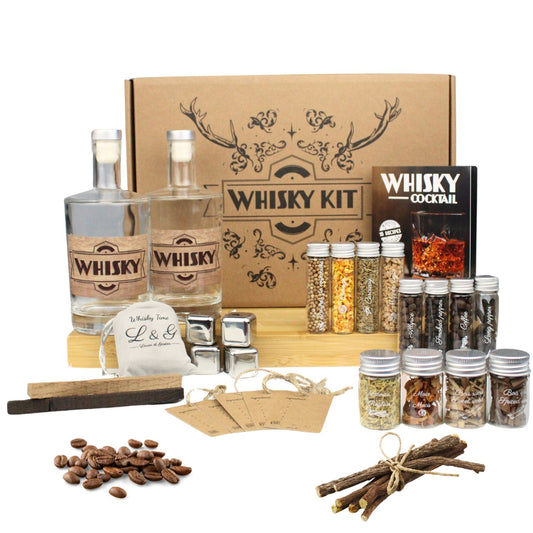
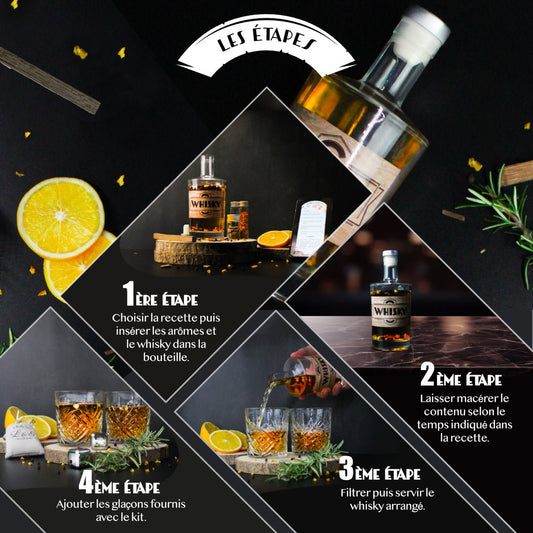
Infused whiskies and homemade whisky infusions are flavoured with fruit, spices or other botanicals, much like infused rum. This is not a formal whisky category in the same way as single malt, bourbon or rye whiskey. Instead, it is a creative way to add new flavours to an existing whisky.
The possibilities are almost endless. Vanilla, cinnamon, orange peel, cocoa and other spices can create very different flavour profiles. That makes infused whisky particularly appealing for anyone who enjoys experimenting and discovering whisky from a new angle.
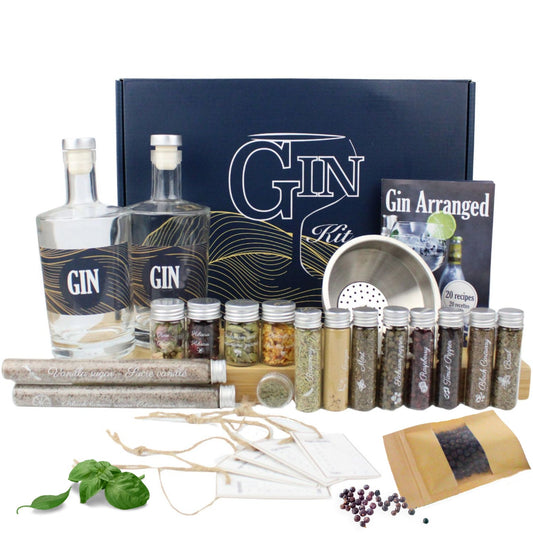
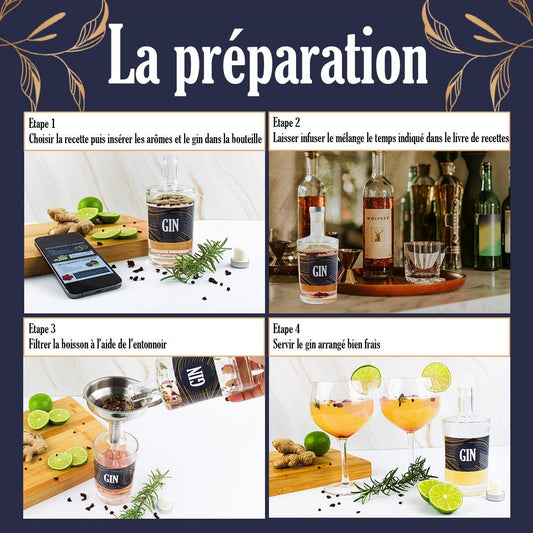
With the Louise & Gaston Infused Whisky Preparation & Tasting Kit, you can explore different combinations and create your own aromatic signature. It is a fun way to discover new flavours or surprise guests with a more personalised tasting experience.
How do you choose the right whisky for you?
With so many whisky styles to choose from, selecting a bottle can seem a little overwhelming at first. These simple pointers from Louise & Gaston can help:
-
What flavour profile are you looking for? If you prefer sweeter, rounder flavours, bourbon or certain Irish whiskeys may be a good place to start. If you want to explore more complex malty, fruity or smoky profiles, single malts are worth discovering. Ultimately, however, each individual bottle has its own character.
-
Try different styles: the Louise & Gaston Whisky Discovery Kit is a great way to explore different aromas and flavour combinations. You can also give it as a gift to a whisky enthusiast or someone curious to discover more.
-
Think about the occasion: bourbon, blended whisky and rye can all work particularly well in cocktails. For a slower tasting session, choose a whisky whose aromas you want to explore more carefully, whether that is a single malt, Irish whiskey, bourbon or another style.
You now know the main differences between single malt, blended whisky, bourbon, Irish whiskey and other whisky styles. In the end, the best choice comes down to your own taste. So, which style will you try next?